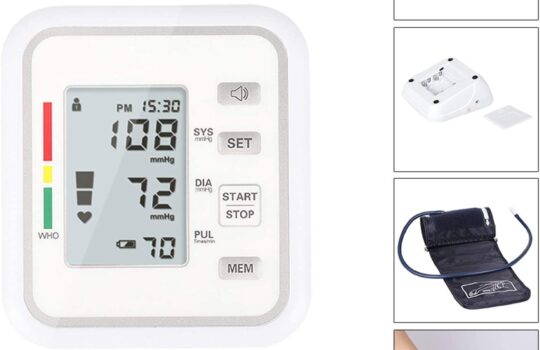
Decoding Your Body: The Significance of Blood Pressure in Health
May 24, 2023 2023-05-26 13:48Decoding Your Body: The Significance of Blood Pressure in Health
Decoding Your Body: The Significance of Blood Pressure in Health
UNDERSTANDING YOUR BODY (blood pressure matters)
**Your Blood Pressure Is The force of circulating blood on the walls of the arteries.** The NHS stated that Blood pressure is a measure of the force that your heart uses to pump blood around your blood vessels.
According to the American Heart Association, hypertension or high blood pressure is when the force of blood flowing through your blood vessels is consistently too high.
WHO coated that there are More than 700 million people with untreated hypertension and that the number of people living with hypertension has doubled to 1.28 billion since 1990 and further revealed that according to the first comprehensive global analysis of trends in hypertension prevalence, detection, treatment, and control, led by Imperial College London and WHO, and published today in The Lancet. The number of adults aged 30–79 years with hypertension has increased from 650 million to 1.28 billion in the last thirty years and Nearly half of these people did not know they had hypertension. Everyone needs to be aware of Cardiac physiology.
Cardiac physiology is one of the most important pieces of medical knowledge in healthcare. The cardiovascular system is constantly adapting to maintain homeostasis in the body, specifically to maintain oxygen perfusion of tissues. The heart will adapt via multiple variables such as heart rate, stroke volume, preload, afterload, diastole, and systole. The cardiovascular system includes the heart and the blood vessels
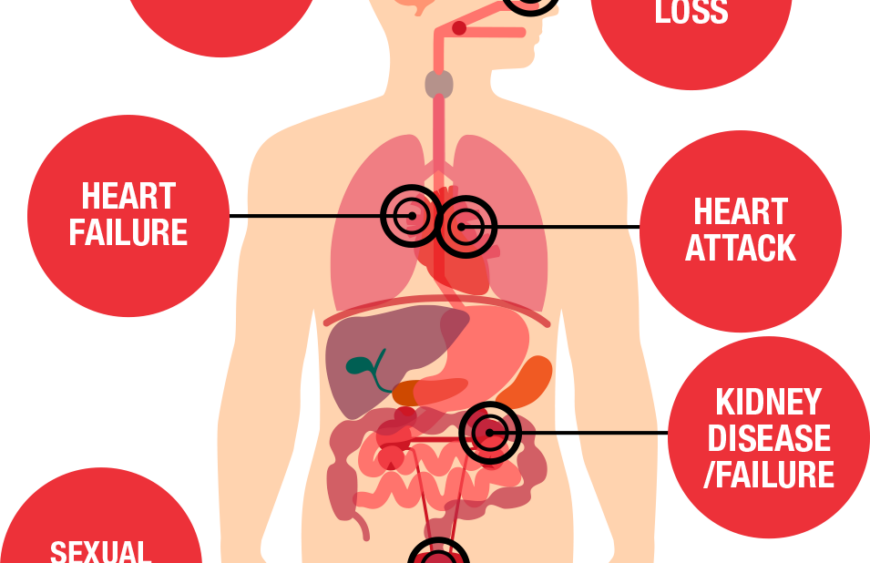
Hypertension – or elevated blood pressure – is a serious medical condition that significantly increases the risks of heart, brain, kidney, and other diseases.
Blood pressure is traditionally measured using auscultation with a mercury-tube sphygmomanometer.
It is measured in millimeters of mercury and expressed in terms of systolic pressure over diastolic pressure.
-
Systolic pressure refers to the maximum pressure within the large arteries when the heart muscle contracts to propel blood through the body.
-
Diastolic pressure describes the lowest pressure within the large arteries during heart muscle relaxation between beating.
Blood pressure is one of the most commonly measured clinical parameters and blood pressure values are major determinants of therapeutic decisions.
Blood pressure is remarkably easy to alter and can be affected by many activities.
Things to note about B/P
-
An estimated 1.13 billion people worldwide have hypertension, most (two-thirds) living in low- and middle-income countries.
-
In 2015, 1 in 4 men and 1 in 5 women had hypertension.
Arterial pressure directly corresponds to
-
Cardiac output
-
Arterial elasticity
-
Peripheral vascular resistance
-
Fewer than 1 in 5 people with hypertension have the problem under control.
-
Hypertension is a major cause of premature death worldwide and ranks among the most common chronic medical conditions.
-
One of the global targets for non-communicable diseases is to reduce the prevalence of hypertension by 25% by 2025 (baseline 20100
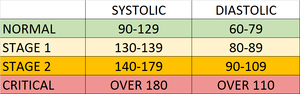
Maintaining blood pressure within normal limits is essential.
-
Blood pressure between 140/80 mmHg to 159/99 mmHg is classified as stage 1 hypertension.
-
Stage 2 hypertension is a pressure between 160/100 mmHg to 179/109 mmHg.
-
Hypertensive urgency describes a blood pressure greater than 180/110 mmHg.
-
A hypertensive emergency refers to a very high blood pressure that results in potentially life-threatening symptoms and end-organ damage.
-
Hypotension, on the other hand, is a blood pressure less than 90/60 mmHg.
It is crucial for the body to be able to adjust to acute changes in blood pressure and for the patient to receive medical treatment or lifestyle adjustments for chronic variations.
Watch out for the silent killer of our time.